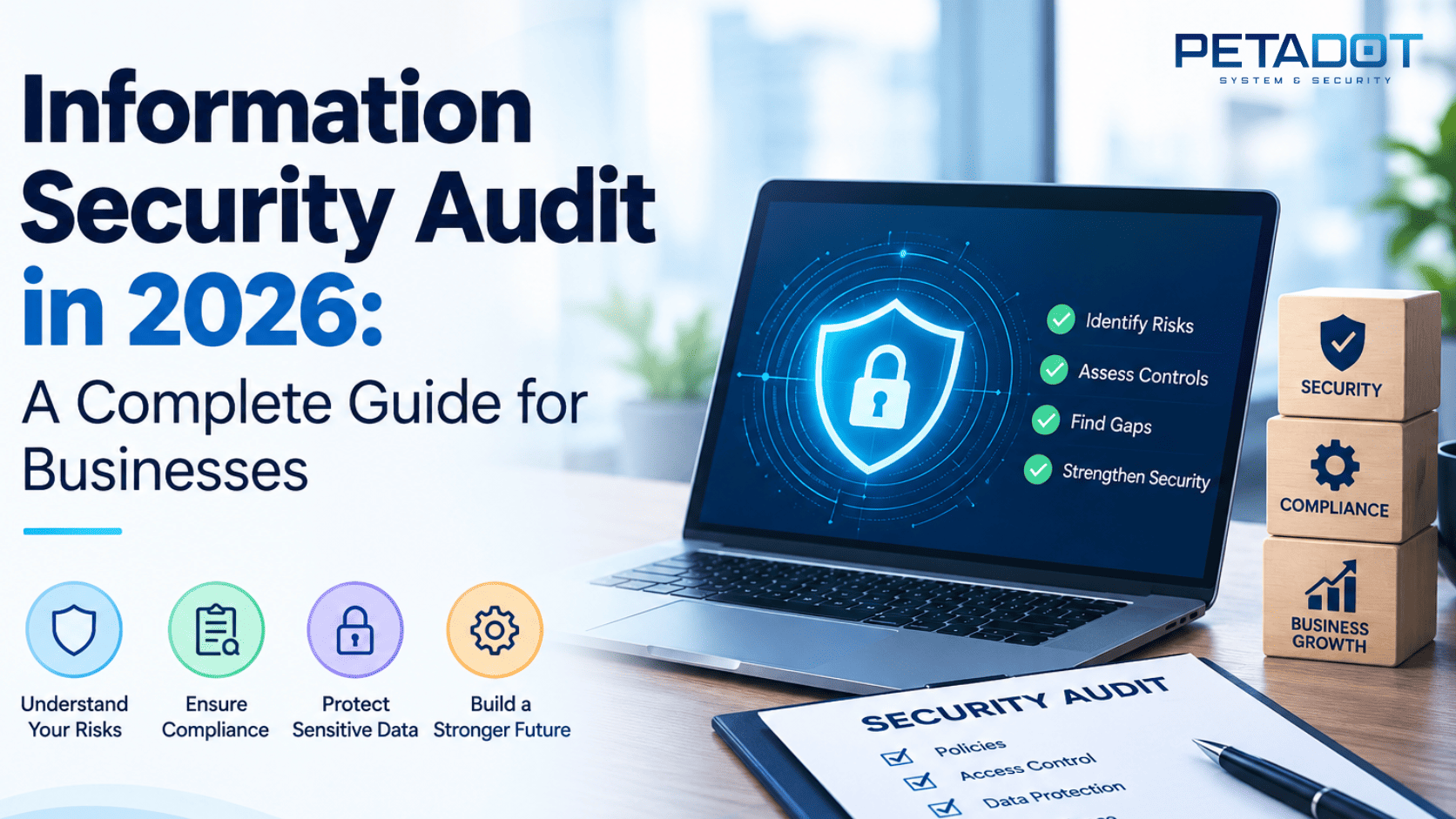
In 2026, businesses rely heavily on digital systems, cloud platforms, web applications, and interconnected networks to manage their daily operations. While technology improves efficiency and business growth, it also introduces security risks that can expose sensitive information to cybercriminals. Data breaches, ransomware attacks, phishing campaigns, unauthorized access, and security misconfigurations continue to create challenges for organizations across industries. An Information Security Audit helps businesses evaluate their existing security controls, identify weaknesses, and determine whether their information protection practices are working effectively.
For organizations that handle confidential customer information, financial records, employee data, or intellectual property, maintaining strong information security is essential. Regular audits provide a structured way to assess security policies, technical infrastructure, access controls, and compliance requirements. By understanding their current security posture, businesses can make informed decisions about reducing cyber risks and protecting critical digital assets.
What Is Information Security Audit?
An Information Security refers to the systematic examination of an organization’s information systems, security policies, procedures, and technical controls. The main objective of an information security audit is to evaluate whether the required controls are in place to safeguard the organization against unauthorized access, use, disclosure, modification, or destruction of information.
Audits involve the collection and analysis of information pertaining to how an organization gathers, stores, transmits, and uses information. Audits can be technical, covering security-related aspects, or cover internal control aspects or cover regulatory aspects or cover the overall information security management system. During the audit process, an auditor may examine network security, user access rights, authentication methods and password policies, encryption techniques, backup and recovery procedures, contingency planning, cloud storage, and employee training on information security.
An effective audit goes beyond finding weaknesses by exploring the implications of the weak areas on the business and determining the measures that can be taken to mitigate the identified risks. Businesses can use leading practices and standards such as ISO/IEC 27001 and related National Institute of Standards and Technology (NIST) standards and guidelines, to conduct their audits. ISO/IEC 27001 is an international standard that specifies the requirements for establishing, implementing, maintaining, and continually improving an Information Security Management System (ISMS) in an organization.
Why Is an Information Security Audit Important in 2026?
The security situation in cyberspace is constantly changing, and companies cannot rely solely on standard security measures. The use of cloud platforms, remote work methods, third-party relationships, and the growth of the organization’s digital presence can introduce new security challenges and attack surfaces. A weak access control rule or a misconfigured security system can cost the company precious data.
An Information Security Audit can help the company by finding and mitigating these potential problems. The security audit checklist could reveal security control weaknesses, leading to data breaches, unauthorized access to sensitive information, or other issues. It will help security experts prioritize the identified problems based on the complexity of resolution. Companies can then resolve simple and pressing issues first and move on to more complex and severe problems after that.
Another compelling reason to perform an information security audit is to improve customer relations. More and more clients and stakeholders require organizations they work with to have robust information security management. An independent security audit shows that the company cares about its security posture and is committed to having secure processes.
Finally, companies must perform an information security audit to ensure that they are upholding the necessary security regulations and standards. Based on the industry, a company might need to hold and display personal data, which requires them to prove that they can keep this data safe and secure. Alternatively, a company might work with other organizations and be required by contract to maintain a certain level of security. An independent security audit can confirm that the company does not have any critical issues, though the audit itself is not proof of compliance with any standards.
Key Components of an Information Security Audit
1. Security Policy and Procedure Review
Combined with the analysis of policies, access rights, network infrastructure and cloud systems, penetration testing, and remediation activities, an information security audit contributes to the companies’ capabilities to improve their security posture. In this regard, it may be concluded that an information security audit is a process that involves necessary steps for analyzing and enhancing security. It should be noted that effective auditing will bring benefits to the business rather than multiple reports.
Thus, it is critical to ensure that the companies conduct risk assessments and address all the necessary issues in order to enhance security. An information security audit may help in protecting the data and, consequently, the business.
2. Network Security Assessment
The security of business networks plays an essential role in the company’s cybersecurity strategy as networks are used to provide communication between servers, workstations, applications, cloud storage, and other network nodes. Auditors examine the infrastructure and security layer of the networks, firewalls, segmentation, remote access, and secure communication methods.
In case the audit is performed using technical tests, the auditor will investigate the network to discover all the open ports and services, applications, and servers that use them. This data can be used to strengthen the network infrastructure and prevent outside attackers from penetrating the network.
3. Access Control and Identity Management
Access control and identity management practices dictate who can access organizational resources, systems, and data and how this access can be gained. Unchecked, these rules may result in employees, contractors, administrators, or other authorized persons having inappropriate access rights, increasing the risk of data breaches.
An information security audit reviews user accounts, privileged access, authentication mechanisms, multi-factor authentication, password policies, and access review procedures. Organizations should follow the principle of least privilege and remove unnecessary permissions promptly. Regular access reviews also help identify dormant accounts and inappropriate privilege assignments.
4. Data Protection and Encryption
Data security and protection are of utmost importance to cybersecurity and information security audit. Therefore, the audit should include an evaluation of how the organization collects, stores, processes, transmits, and disposes of data. An auditor should focus on data classification, storage locations, and data access.
The auditor should comment on how data security is ensured, including encryption, data retention policies, and data protection in transit and at rest. They should check if data center and database software can disclose any confidential and sensitive data due to insufficient access control or shared hosting. Finally, the auditor should ensure that the organization disposes of data securely when it is no longer needed.
5. Vulnerability Assessment and Penetration Testing
Organizations can implement security policies and tools to protect but be open to attacks from determined bad guys. This risk can be detected and resolved via technical security testing that finds the security weaknesses of systems that are prioritized by the auditor.
Vulnerability Assessments find and prioritize the flaws within the system and Penetration testing ensures that the suspected flaws are actually exploitable according to the agreed scope. The organization should think about having separate assessments for Vulnerability Assessments and Penetration Testing.
Vulnerability Assessment and Penetration Testing (VAPT Services) can be employed to identify issues such as SQL injection, cross-site scripting, insecure application programming interfaces (APIs), insecure authentication and authorization, exposure of cloud system management functions, and inappropriate cloud storage data retention. The information security audit is a valuable security exercise that analyzes the control environment and verifies the effectiveness of information security management. VAPT complements the information security audit by targeting a specific scope, testing procedures, and system vulnerabilities.
6. Cloud Security Review
Cloud platforms host numerous business applications and systems, data storage, and remote working solutions. However, the ability of the cloud to scale and its flexibility may have security implications, including misconfigured cloud storage, insufficient or malformed permissions, and insecure cloud system administration functions.
An information security audit is designed to recommend how to improve cloud security in terms of the company’s needs and the shared responsibility model. In particular, auditors will evaluate controls over cloud computing platform elements, including identity and access management, network security, encryption, auditing and logging, and data backup and recovery.
7. Incident Response and Backup Review
Although ideally, no security incidents arise, the reality is that each organization is vulnerable to ransomware, data breaches, and other cybercrimes. Thus, The information security audit will comment on the documented and actual incident response procedures, roles, and responsibilities, and reporting rules.
Further, the auditor will evaluate whether documented and effective backup and recovery procedures exist and ensure that the integrity of the organization’s information and data is not compromised. The audit will analyze if the documented procedures have been tested and will recommend ways of ensuring business continuity and system availability during an incident.
Information Security Audit Process: Step by Step
Step 1: Define the Audit Scope
In the first step, it is required to define what business units, applications, systems, locations, and information assets will be subjected to the IS audit. The audit scope explicitly defines the objectives, operating and contractual requirements, and significant security risks that the organization is exposed to.
Hence, it is necessary to create a list of assets that will be included in the audit and those that can be excluded.
Step 2: Identify Critical Assets and Risks
In the second step, the audit team should make a list of critical assets and security risks facing the organization. Critical assets include the organization’s customers, financial records, business applications, intellectual property, and infrastructure. For each item on the list, security threats and weaknesses should be identified.
The identified security risks will help set the audit’s priorities and define the significance of each control
Step 3: Review Policies and Collect Evidence
At this stage, the auditor reviews the evidence related to the organization’s security policies. It is achieved by analyzing the documents describing the infrastructure and incident reports, collecting evidence, and interviewing IT and security personnel. The auditor reads the policies related to network security, system access, and asset management and compares them to the collected evidence.
If the auditor has sufficient evidence to support the findings and conclusions, the next step will be carried out smoothly. On the other hand, if there are deficiencies in the collected evidence, it has to be identified at this stage to prevent mistakes when drawing final conclusions based on insufficient data.
Step 4: Assess Security Controls
The next step is to determine if the organization’s security controls are appropriately designed and implemented. As appropriate, this may include configuration reviews, access tests, vulnerability scans, analyses of logs, and other authorized technical assessments.
Organizations can use relevant NIST assessment activities to develop procedures to assess the security controls and document findings.
Step 5: Identify and Prioritize Findings
After assessment, the weaknesses shall be recorded and ranked based on their severity, possibility of being exploited, impact on business, and sensitivity of the information involved.
The critical problems that may cause the exposure of the business should be prioritized. The other vulnerabilities, which require risk assessment, shall be addressed accordingly, with specific responsibilities and deadlines.
Step 6: Prepare the Audit Report
The audit report contains a summary of the scope and methodology of the audit, the evidence examined, the security gaps, and risk levels and recommendations for remediation. The report should be understandable to security personnel and contain enough detail for the management to make well-informed decisions based on the findings.
A report can focus on describing the recommendations rather than the problems that were discovered.
Step 7: Remediate and Conduct Follow-Up Testing
The last stage is to deal with the recognized weaknesses. Depending on the results of the analysis, it can include updates to systems, tighter controls over accesses, fixing of clouds, revision of policies, and adjustment of the procedures for responding to incidents.
The follow-up procedures allow assessing whether the detected problems were properly resolved and if there are additional areas for improvement.
Benefits of an Information Security Audit
An Information Security Audit can provide several benefits for an organization. Primarily, it serves to increase an organization’s insight regarding the security risks it is exposed to and the possible impact said risks could have. This information can then be used to prioritize security spending and choose the most relevant controls to adopt or improve upon.
Additionally, an IS audit can help an organization better understand the connection between technical and organizational security weaknesses and possible business impacts. By prioritizing the problems found, the organization can ensure that the remediation efforts are focused on the issues that demand the most attention.
Finally, IS audits can help an organization analyze and compare its current practices to the requirements it must adhere to in order to achieve specific compliance goals. Although an IS audit can facilitate the process of preparing for an ISO/IEC 27001 certification by highlighting areas of improvement, the actual process of becoming certified still requires undergoing the relevant certification process.
By conducting IS audits, an organization will not only mitigate the risks it faces but also facilitate the process of building awareness within the staff, foster accountability, prepare the organization better for incidents, and build trust with stakeholders. Overall, audits would transform into a self-renewing and self-improving process as the organization evolves and changes..
Information Security Audit vs. Cybersecurity Audit vs. VAPT
Although these terms are used interchangeably, they might relate to separate aspects of the assessment.
An information security audit is a type of examination of the policies, procedures, technical controls, and evidence used by the entity to secure its information. Typically, it covers the governance, access control, data security, business continuity, and regulatory compliance areas. On the other hand, a cybersecurity audit usually refers to a technical evaluation of the business’s network security, defenses against cyber threats, monitoring activities, and cloud infrastructure. VAPT is an acronym that stands for Vulnerability Assessment and Penetration Testing.
As the name suggests, it is a type of testing that is used to evaluate if the organization’s systems, networks, and applications are insecure. The results of such an audit help the organization understand the scope of damage, if any, that can be done to its IT infrastructure.
The three terms, therefore, refer to separate concepts, but they can overlap. For example, the organization might conduct an IS audit, followed by the VAPT of its systems to identify and address weaknesses. Both activities would fall under a cybersecurity audit, which is broader.
Common Information Security Audit Challenges
Businesses may face a number of challenges during the audit preparation process. Insufficient inventory of assets may hinder the ability to identify all systems in which sensitive information may be stored or processed. Documentation that is out of date and does not reflect reality, as well as problems associated with access management, may complicate the audit process.
In addition, organizations may adopt the strategy of documenting the policies and procedures and mistakenly believe that this is sufficient for passing the audit. In reality, the documentation must be corroborated by evidence that actual practices comply with the declared policies. Additionally, auditors should test the effectiveness of controls if there is justification and approval.
Finally, limited staff and time resources may prevent organizations from adequately addressing the issues identified by the auditors. To mitigate this challenge, firms should implement corrective actions in accordance with the priority level of the identified issues. It is recommended to formalize responsibilities for implementing corrective actions and ensure that all recommendations are fully implemented. Finally, firms should document the evidence during the year to ensure that the next round of audits is meaningful, and time is spent on substantive issues rather than collecting basic evidence.
Information Security Audit Best Practices for 2026
Businesses should plan regular audits according to their needs or requirements. The audit should be held if there is a significant change in infrastructure, cloud platform, or network, introduction of new security measures, or updates to regulations.
Notably, businesses need to update the inventory of their information assets and ensure that data is adequately secured. Also, the organization should track permissions, protect key records, applications, and databases, and secure logs from being deleted or modified.
Organizations should invest in the auditing process by choosing the appropriate frameworks and standard operating procedures. For example, it is appropriate to apply ISO/IEC 27001 for developing an information security management system. Meanwhile, the National Institute of Standards and Technology (NIST) can provide guidelines for conducting inventories and assessments. Thoroughly documenting the method and tools used, the scope, and other pertinent details in the chosen frameworks is essential. The selection of the standards to be applied in auditing depends on the organization’s structure, size, industry, technology infrastructure, and appetite for risks.
In addition, firms should set time frames for remediation and collect actionable evidence. In this case, it is necessary to ensure that test systems and processes are up and running, conduct reviews of the retention periods for backup data, and update response procedures in case of an incident. It is more appropriate to use automated tools during the evidence collection, configuration checks, and continuous monitoring than manual methods.
However, experts should evaluate the findings because the interpretation of the results requires experience and knowledge. Finally, the organization should consider information security as a crucial aspect that requires constant attention and awareness. In other words, businesses should perform security assessments and audits regularly, update and train employees, and invest in updating systems, applications, and other aspects of operations in order to stay protected against cybercrime and threats.
How Petadot Can Help with Information Security
Businesses need an organized strategy to detect and address the security issues and enhance their defenses against cyber threats. Petadot offers cybersecurity solutions that can help the enterprise to remain strong and safe from threats.
Depending on the scope and business needs, Vulnerability Assessment and Penetration Testing, security monitoring, digital forensics, and incident response services can help the organization to remain protected by detecting technical flaws, weaknesses, and incidents.
VAPT can be used to identify the flaws in web applications, APIs, mobile apps, networks, and cloud environments. Security monitoring can be helpful in detecting threats, and digital forensics and incident response can assist an enterprise in investigating and analyzing incidents.
When an organization thinks of an Information Security Audit, it is essential to understand the purpose of the audit clearly and decide on the scope of work and choose the right set of audit, compliance review, and technical testing services. These security services will provide a realistic and strategic plan of action to address issues detected during the audit and enhance the security posture of an enterprise.
Conclusion
An Information security audit is an important component of the cybersecurity risk management process in 2026. It allows companies to assess the state of their security, ensuring that they are using the necessary tools and techniques to protect data. The security audit helps recognize weaknesses, enhance data safety, and determine how the current security practices support the company’s goals and the required compliance.
Combined with the analysis of policies, access rights, network infrastructure and cloud systems, penetration testing, and remediation activities, an information security audit contributes to the companies’ capabilities to improve their security posture. In this regard, it may be concluded that an information security audit is a process that involves necessary steps for analyzing and enhancing security. It should be noted that effective auditing will bring benefits to the business rather than multiple reports.
Thus, it is critical to ensure that the companies conduct risk assessments and address all the necessary issues in order to enhance security. An information security audit may help in protecting the data and, consequently, the business.Cyber Security Companies in Gurgaon , Cyber security Companies in Kerala, Cyber Security Companies in Cleveland,
Looking to strengthen your organization’s cybersecurity? Explore Petadot’s cybersecurity services at Petadot to learn more about VAPT and other security solutions that may support your organization’s security assessment and improvement goals.